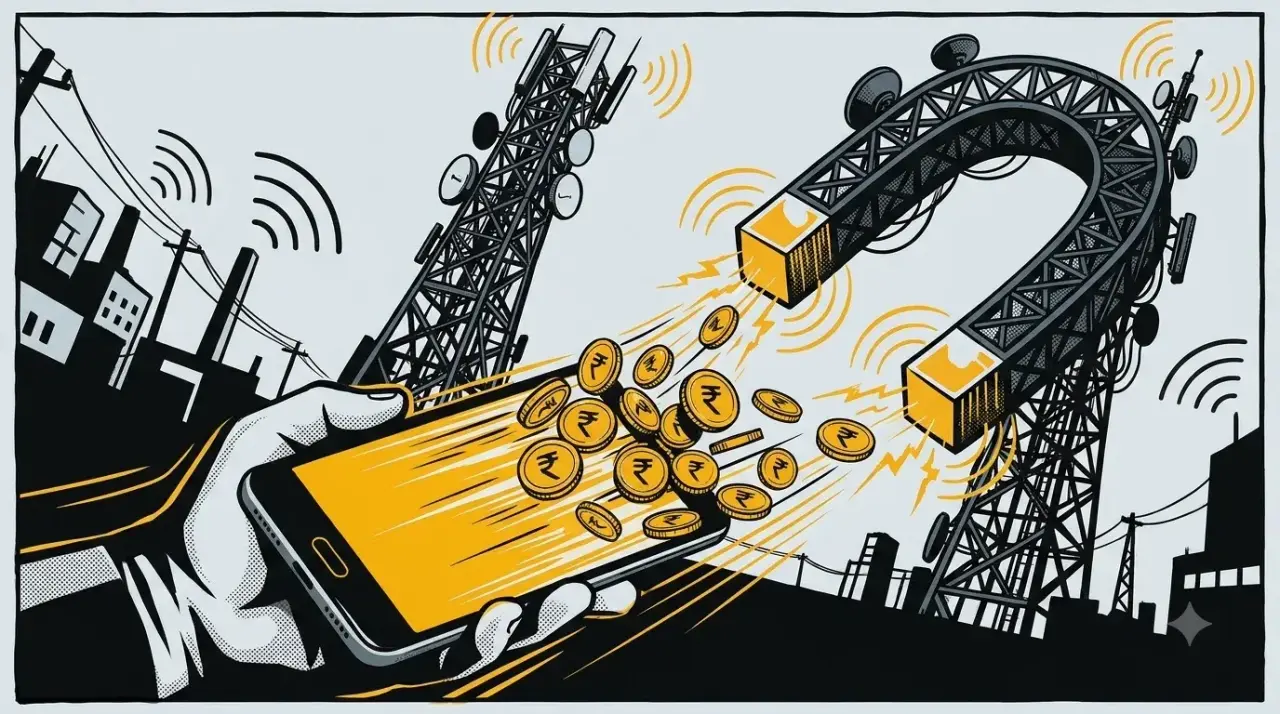
Open Google Pay, PhonePe, or Paytm today to renew your monthly mobile pack, and you will notice something unmistakable: the baseline cost of maintaining a smartphone SIM card has dramatically climbed. In fact, according to independent telecom consumer surveys conducted by LocalCircles, over 81% of surveyed Indian mobile subscribers reported feeling dissatisfied with frequent tariff revisions, shortened 28-day validity windows, and unbundled services. When you compare today's rates against late 2019—when entry-level 28-day daily-data packs cost ₹149 to ₹199—the baseline annual cost to keep a smartphone active on daily high-speed data has surged by nearly 100%.
Back in 2016, Indian consumers could choose from 12 competing telecom operators—including Aircel, Telenor, Tata Docomo, Reliance Communications, MTS, Videocon, Idea, and Vodafone. Following intense price competition, mounting infrastructure debt, and thousands of crores in Adjusted Gross Revenue (AGR) liabilities, 8 operators either exited or merged. Today, only 4 operators remain active in the wireless market: Reliance Jio, Bharti Airtel, Vodafone Idea (Vi), and state-run BSNL. Among them, Telecom Regulatory Authority of India (TRAI) data shows that Reliance Jio (39.31%) and Bharti Airtel (38.01%) form a formidable private duopoly controlling 77.32% of all wireless subscribers and over 80% of nationwide broadband traffic.
1. The Evolution of Entry-Level Plans and the ARPU Push
Rather than sudden across-the-board announcements, operators have systematically reshaped their product catalogs through plan pruning and tier migration:
- Airtel's Shift to ₹349: Airtel phased out its popular ₹299 (1.5GB/day for 28 days) plan, steering mainstream users toward the ₹349 pack. While this represents a 16.7% increase in ticket size, it also upgrades daily data to 2GB/day—a strategic pivot, because as we examine below, 2GB/day is the exact gateway required to qualify for Unlimited 5G. Along the way, older mid-tier packs like ₹579, ₹619, and ₹649 were gradually phased out.
- Jio's Base Plan Adjustments: During the industry-wide August 2025 tariff revision cycle, Reliance Jio discontinued its entry-level ₹249 pack and re-anchored its daily-data baseline at ₹299 (a ~20% adjustment).
- The Financial Context Behind ARPU: With billions invested in nationwide 5G networks, operators are focused on expanding ARPU (Average Revenue Per User). As reported in Q1 FY27 (quarter ended June 2026) financial disclosures, Airtel posted an industry-leading ARPU of ₹264.0 (with an internal target of ₹300), Reliance Jio reported ₹215.6, and cash-constrained Vodafone Idea (Vi) posted ₹195.0. (Q2 FY27 results for the September 2026 quarter are slated for November disclosures).
| Operator | Previous Popular Pack | Current Flagship Base Plan | Plan Difference | Reported ARPU (Q1 FY27) |
|---|---|---|---|---|
| Bharti Airtel | ₹299 (1.5GB/day, 28D) | ₹349 (2GB/day, 28D) | +16.7% cost (+0.5GB/day + 5G unlocked) | ₹264.0 |
| Reliance Jio | ₹249 (1GB/day, 28D) | ₹299 (1.5GB/day, 28D) | +20.1% cost (+0.5GB/day bump) | ₹215.6 |
| Vodafone Idea (Vi) | ₹269 (1GB/day, 28D) | ₹299+ (1.5GB/day, 28D) | +11.1%+ baseline revision | ₹195.0 |
2. Three Structural Dynamics Driving Up Your Monthly Spend
Beyond headline price changes, three structural packaging choices shape what Indian consumers actually pay: 5G eligibility thresholds, the 28-day billing cycle, and bundled media limitations.
Trap 1: The 2GB/Day Gateway for Unlimited 5G
While banners advertise "Unlimited 5G Data," eligibility is strictly tied to daily allowance tiers. If you purchase an entry 1.5GB/day plan, you do not receive unlimited 5G data benefits, regardless of whether you have a 5G handset connected to a 5G tower.
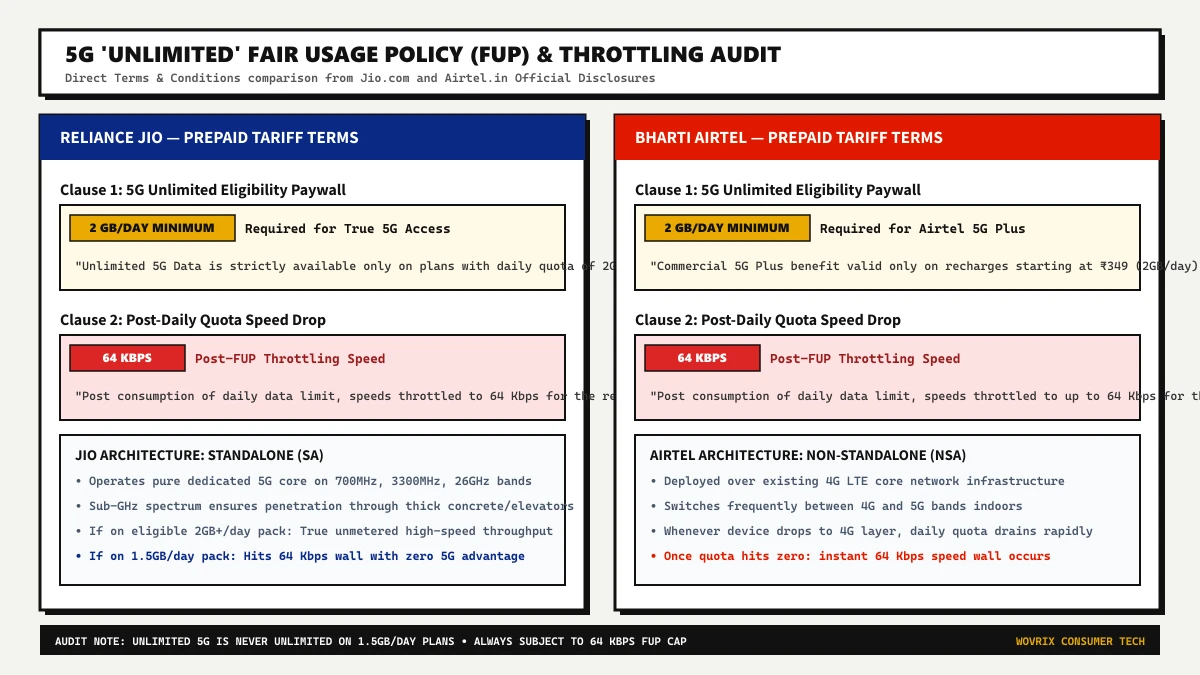
Figure 2: Summary of 5G FUP terms and 64 Kbps throttling thresholds on Jio and Airtel.
- The 2 GB/Day Threshold: Both Reliance Jio and Bharti Airtel require a plan with at least 2 GB/day (typically ₹349/month or ₹859/quarter) to activate unlimited 5G. Subscribers on 1.5GB/day packs draw from their fixed daily bucket.
- The 64 Kbps Post-FUP Cliff: On non-eligible packs, once your daily quota is exhausted, throughput drops to 64 Kbps. At 64 Kbps, standard browsing and media downloads become virtually unusable.
- SA vs. NSA Architectures: Jio deployed Standalone (SA) 5G with dedicated sub-GHz 700MHz frequencies that provide deeper indoor penetration. Airtel utilizes Non-Standalone (NSA) 5G overlaid on existing 4G cores. When handsets drop to 4G in indoor locations on Airtel, data draws directly from the daily quota.
Trap 2: The 28-Day Billing Cycle (Paying for 13 Months a Year)
In early 2022, TRAI issued a directive mandating that telecom operators introduce at least one plan with 30-day validity and one with calendar-month validity (renewing on the exact same date every month, such as Jio's ₹259 plan). While these plans were launched in compliance with regulations, operators maintain only a minimal selection of them, while predominantly promoting 28-day, 56-day, and 84-day cycles on their home screens.
Why does the 28-day cycle matter so much mathematically?
- Seven months of the year have 31 days, four have 30 days, and February has 28 (or 29) days.
- On a 28-day cycle, you lose 2 to 3 calendar days every single month.
- Over a full 365-day year, the exact number of cycles required is:
Because of this calendar discrepancy, anyone on continuous 28-day recharges pays for 13 billing cycles inside a 12-month calendar year. If your monthly recharge is ₹349, that 13th cycle adds an extra ₹361 per SIM annually without providing additional calendar coverage.
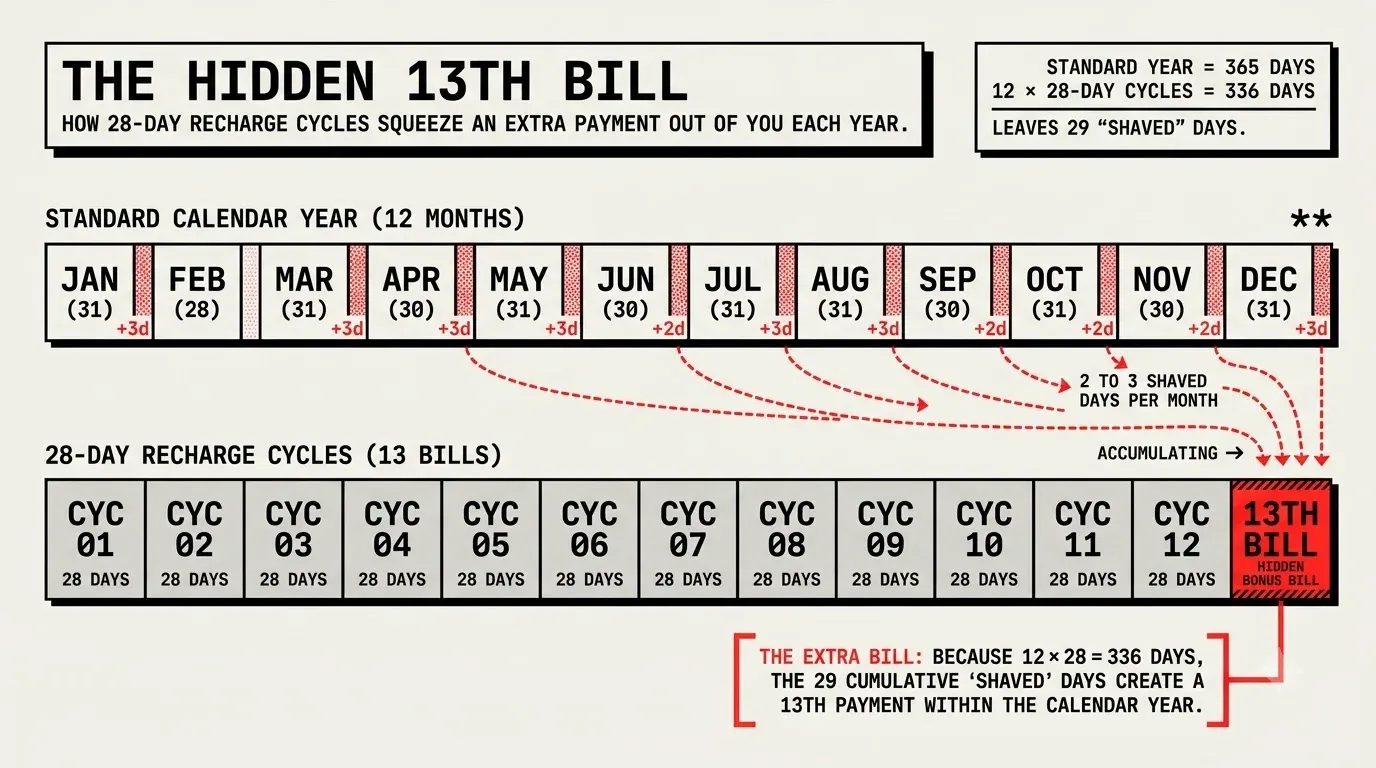
Figure 3: Breakdown of how 28-day billing cycles accumulate into an extra 13th recharge each year.
The 13th-Month Recharge Penalty Calculator
See exactly how much the 28-day billing cycle and unneeded daily-data packs drain from your family budget each year.
Trap 3: Bundled OTT Restrictions (Mobile-Only Screens)
Recharge plans frequently advertise bundled access to popular streaming platforms like JioHotstar or Disney+ Hotstar. Before paying a premium for these bundles, check the licensing specifications:
- Single Mobile Screen Limitation: Most bundled subscriptions are restricted to a single smartphone or tablet screen and cannot be cast or logged into a Smart TV.
- Ad-Supported Video Quality: Bundled OTT tiers are typically ad-supported mobile plans capped at 720p HD resolution rather than uncompressed 1080p/4K TV tiers.
3. Why Haven't Subscribers Ported to BSNL or Vi en Masse?
Following major tariff revisions, social media often sees spikes in #PortToBSNL discussions. However, actual subscriber migration remains tempered by infrastructure and operational realities:
- BSNL's Network Rollout Pace: While BSNL has been actively deploying indigenous 4G technology (with a long-term roadmap toward 5G), wide-scale deployment has taken years longer than private rollouts. In many urban and suburban areas, data throughput and latency still lag behind private networks.
- Vodafone Idea's Financial Restructuring: To manage significant spectrum and AGR liabilities, Vodafone Idea converted debt into equity, resulting in the Government of India holding an approximate 49% stake. While Vi continues to service key urban circles, its capital expenditure for rapid 5G expansion has remained constrained relative to Jio and Airtel.
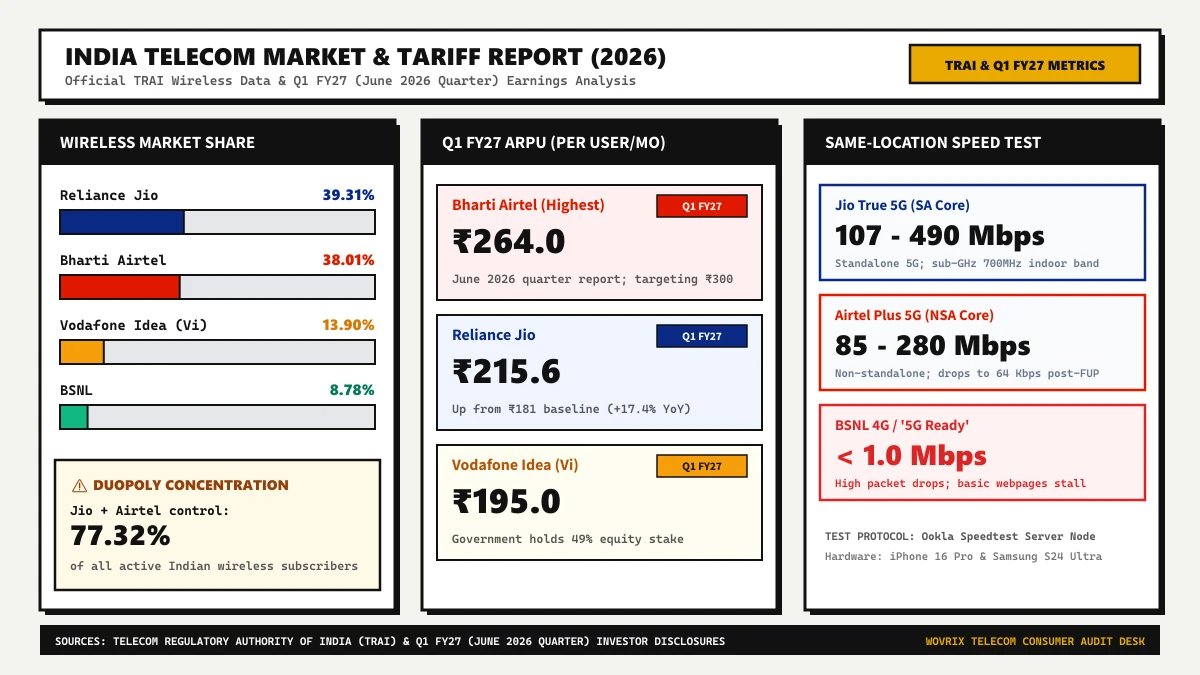
Figure 4: TRAI wireless subscriber distribution and Q1 FY27 ARPU metrics across Indian telecom operators.
Network Physics: Jio vs. Airtel in Everyday Scenarios
- Indoor Coverage & Elevators: Jio's deployment of sub-GHz 700MHz spectrum allows signal propagation through concrete walls and basements with lower attenuation than higher frequencies.
- Broadband & Latency: For fixed broadband and work-from-home reliability, Airtel's Xstream Fiber infrastructure maintains high reputation marks for low latency and consistent international peering.
4. The Smart Consumer Recharge Playbook
Consumers can optimize their mobile expenditure by matching recharge tiers to actual usage patterns:
Step 1: The Overlooked "Value Pack" for Seniors & Wi-Fi Users (₹189–₹199)
For secondary SIM cards, senior family members who primarily make voice calls, or individuals who spend their day on home/office Wi-Fi, purchasing high-allowance daily-data packs (₹299–₹349) is often unnecessary.
Both major operators offer dedicated voice-centric value packs:
- Reliance Jio: ₹189 (Unlimited Calling + 2 GB total data for 28 days)
- Bharti Airtel: ₹199 (Unlimited Calling + 2 GB total data for 28 days)
- Vodafone Idea (Vi): ₹199 (Unlimited Calling + 2 GB total data for 28 days)
Because third-party payment apps typically promote daily-data bundles on their primary screens, these value packs are often overlooked. You can easily find them directly under the "Value" or "Others" tab on jio.com or airtel.in.
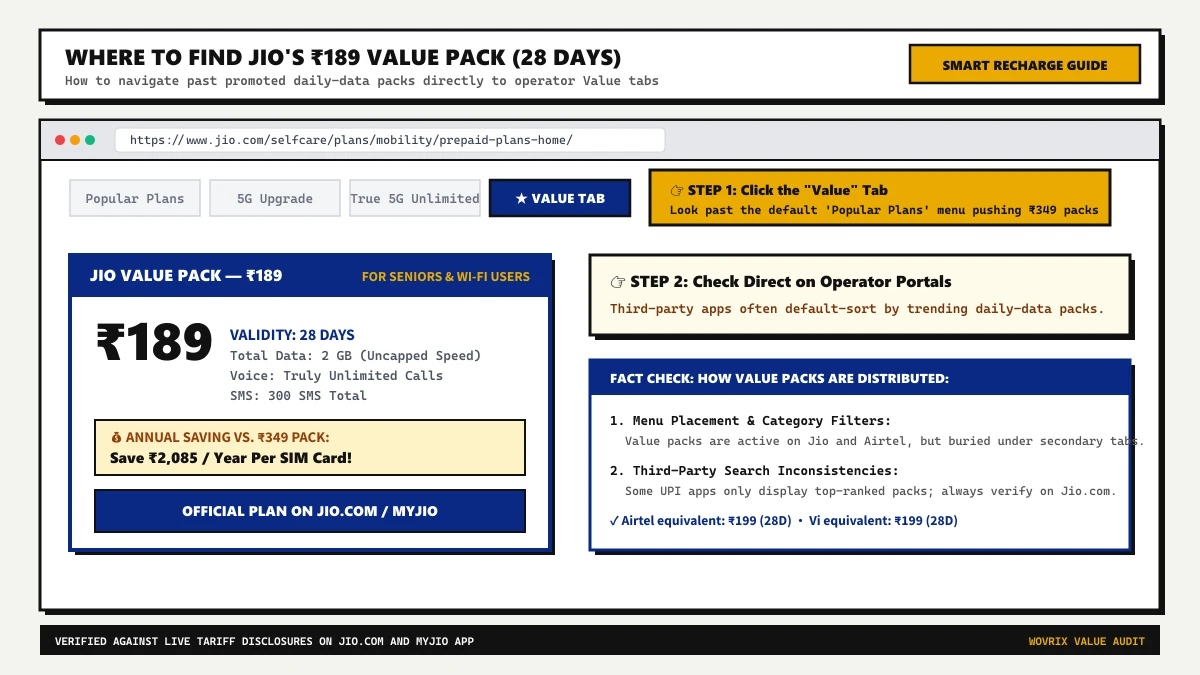
Figure 5: Navigating to the official Value tab on operator self-care portals.
Step 2: Evaluating 84-Day vs. 28-Day Packaging
If you require continuous daily data, opting for an 84-day or 90-day pack can reduce the frequency of renewals and occasionally offer promotional data vouchers compared to repeating consecutive 28-day recharges.
Step 3: Annual 365-Day Plans as a Tariff Hedge
For households with sufficient upfront cash flow, a 365-day annual plan offers two concrete structural advantages:
- True Calendar Year Coverage: It provides exactly 365 days of service, eliminating the 13th recharge cycle inherent in monthly 28-day increments.
- Tariff Lock-In: If telecom operators institute interim price revisions during the year, existing active annual plans remain locked at their original purchase rate until expiry.
| User Profile | Recommended Approach | Target Plan Category | Financial Benefit |
|---|---|---|---|
| Seniors / Wi-Fi-First Users | Jio (₹189) or Airtel (₹199) | 28-Day Voice + 2GB Total (Value Tab) | Saves ~₹2,085 / yr vs. ₹349 daily pack |
| Heavy 5G Data Users | Reliance Jio or Airtel | 2GB/day+ Quarterly Packs (e.g. ₹859–₹899) | Unlocks unmetered 5G + reduces renewal friction |
| Long-Term Planners | Jio or Airtel | 365-Day Annual Unlimited Plan | Avoids 13th month + hedges future tariff hikes |
| Work-From-Home / High Bandwidth | Fixed Fiber + Mobile Value Pack | Fiber broadband paired with ₹189/₹199 SIM | Lowest overall cost with maximum home bandwidth |
Frequently Asked Questions (FAQs)
1. Where can I find Jio's ₹189 plan and Airtel's ₹199 plan?
The ₹189 Jio plan (28 days validity, unlimited calls, 2GB total data) and Airtel's ₹199 equivalent are official plans displayed under the "Value" or "Others" tab on jio.com and airtel.in. They can often be overlooked on third-party recharge apps that highlight popular daily-data packs first.
2. Why do Indian telecom operators use a 28-day billing cycle instead of 30 days?
By setting standard monthly validity at 28 days, subscribers lose 2 to 3 days each month relative to calendar months. Over a 365-day year (365 ÷ 28 = 13.035), this results in 13 recharges across a 12-month calendar year for users on standard 28-day cycles, even though TRAI mandated 30-day and same-date calendar-month options in 2022.
3. Is Unlimited 5G available on 1.5 GB/day plans in Jio and Airtel?
No. Both Reliance Jio and Bharti Airtel restrict Unlimited 5G eligibility to plans providing 2 GB/day or higher. On 1.5 GB/day tiers, speeds drop to 64 Kbps after exhausting the daily data limit.
- Subscriber & Market Share Data: Compiled from Telecom Regulatory Authority of India (TRAI) Telecom Subscription Reports through mid-2026.
- ARPU & Financial Disclosures: Sourced from Q1 FY27 (June 2026 quarter) official investor filings for Bharti Airtel (₹264.0), Reliance Jio (₹215.6), and Vodafone Idea (₹195.0).
- Tariff & Packaging Verification: Cross-verified directly against live tariff disclosures on jio.com, airtel.in, myvi.in, and bsnl.co.in.
- Consumer Sentiment Metrics: Survey data referenced from national consumer surveys conducted by LocalCircles on mobile recharge satisfaction.